Public Art and the Architecture of Place
Art and Architecture: Creating Meaningful Places
Architecture and art have long shared a common purpose: shaping how people experience the world around them. While architecture shapes how we inhabit and experience a space, art invites us to see it—and the world around us—through a different lens. Together, they transform buildings and campuses into places that inspire curiosity, reflect identity, and foster a sense of belonging. The most memorable public spaces often succeed not simply because of their design, but because architecture, landscape, and art work together to create experiences that resonate long after a visit.
Throughout history, artists and architects have collaborated to tell stories, celebrate culture, and express the values of institutions and communities. Today, that relationship remains as relevant as ever. Whether through integrated installations, sculptural landmarks, immersive environments, landscape features, or interpretive works that connect people to place, public art has become an essential component of many projects. When thoughtfully incorporated, art can strengthen a project's mission, deepen community connections, and create destinations that are both functional and meaningful.
The Rise of Public Art Programs
Recognizing the value that art brings to the public realm, many universities, municipalities, and public agencies have established formal public art programs to ensure art remains an integral part of capital projects. Across the country, "percent-for-art" policies dedicate a small portion of construction budgets toward the commissioning, acquisition, and stewardship of public artwork. These programs have grown significantly over the last few decades, creating opportunities for artists to collaborate with institutions and design teams while enhancing the everyday environments where people learn, work, gather, and heal. The programs also ensure that art is considered early in the design process, fostering more meaningful integration between artist, architect, and owner.
Texas organizations have been leaders in this movement. The City of Austin established one of the state's earliest Art in Public Places programs in 1985, dedicating a percentage of eligible capital improvement projects toward public art and building a collection of hundreds of site-specific works throughout libraries, parks, airports, and civic facilities. Higher education systems have similarly embraced public art as part of their campuses and institutional identity. The Texas Tech University (TTU) System Public Art Program has commissioned more than 150 works since its creation in 1998, while the Texas State University System's (TXST) collection includes hundreds of artworks distributed across its member institutions. At The University of Texas at Austin (UT Austin), the Landmarks program integrates public art into the campus experience through permanent installations that engage students, visitors, and the broader community.
Public Art as a Design Partnership
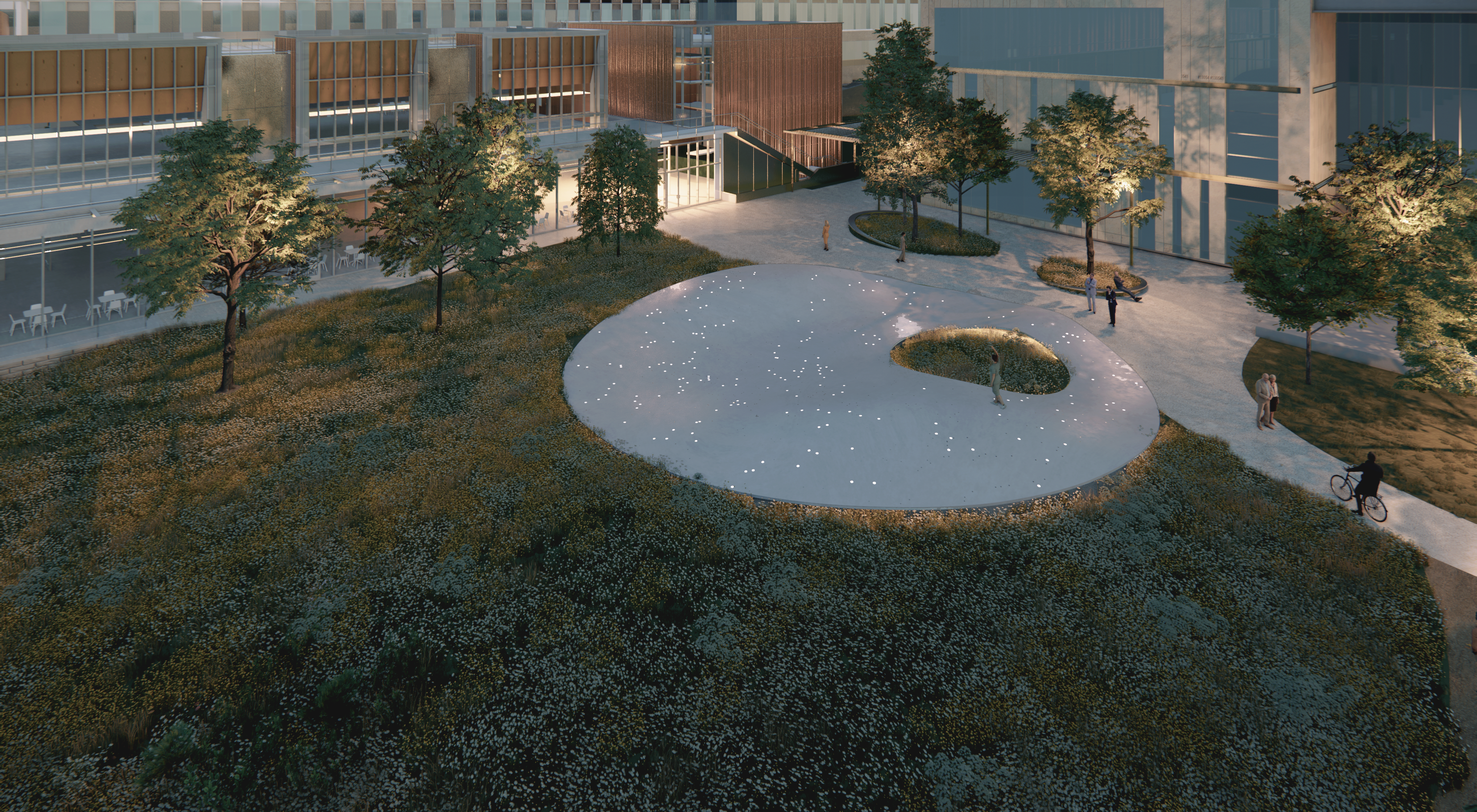
At BGK, we’ve been fortunate to collaborate with artists, curators, universities, municipalities, and public agencies on projects where art and architecture work together to create more meaningful places. As Maya Lin’s Floating Landscape nears completion at UT Austin’s new Autry C. Stephens Engineering Discovery Building, we’ve been reflecting on the many artists and public art initiatives that have shaped our work over the years—from civic landmarks and campus gathering places to academic environments that express an institution’s history, mission, and aspirations. The projects that follow illustrate the many ways art can give a place identity, foster connection, and enrich the experience of architecture.
Civic Foundations
Some of BGK's earliest experiences working alongside public art programs came through civic projects in Austin. These projects demonstrated how art can be woven directly into architecture, becoming an integral part of how a building is experienced rather than an addition applied after construction.
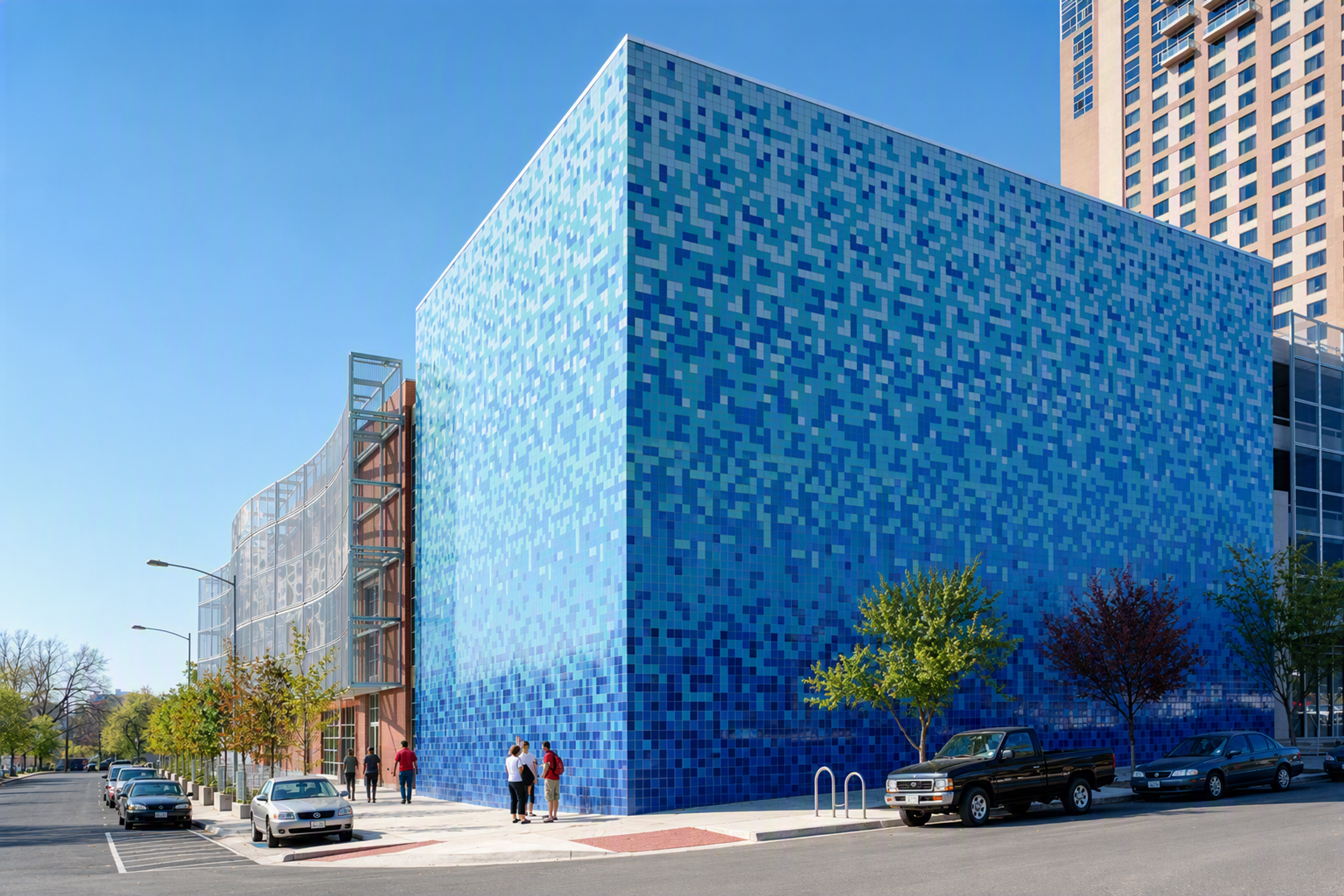
An early BGK civic project, the Austin Convention Center Parking Garage, features Big Chiller Blues by artist Ann Adams. Composed of more than 10,000 square feet of blue glass tile, the installation was inspired by the district cooling equipment housed within the structure. Rather than disguising a highly utilitarian building, the artwork embraces its purpose, translating the concept of cooling and movement into a vibrant visual expression. More than two decades after its installation, Big Chiller Blues remains a recognizable downtown landmark and a popular backdrop for photographs, demonstrating how public art can become woven into the shared experience and collective memory of a city.
At the Palmer Events Center, two distinct Art in Public Places commissions were incorporated into the facility. Holly Kincannon's For Jeep, With Love introduced hand-carved limestone elements integrated into the building's façade. Inspired by fossils and marine forms, the carvings complement the building's natural limestone exterior and celebrate the materials and geology of Central Texas. Inside, Twyla Arthur's Autumn Ponds transformed the lobby floor into a series of large-scale stone mosaics inspired by floating leaves and the cyclical patterns of nature. Together, these works helped establish a unique identity for the facility while demonstrating how art can become inseparable from the architecture itself.
Creating Community on Campus
As public art programs expanded across Texas universities, the role of art increasingly shifted from enhancing buildings to enriching the student experience. Residence halls and student-focused facilities began incorporating artworks that create gathering places, foster interaction, and build a sense of community.
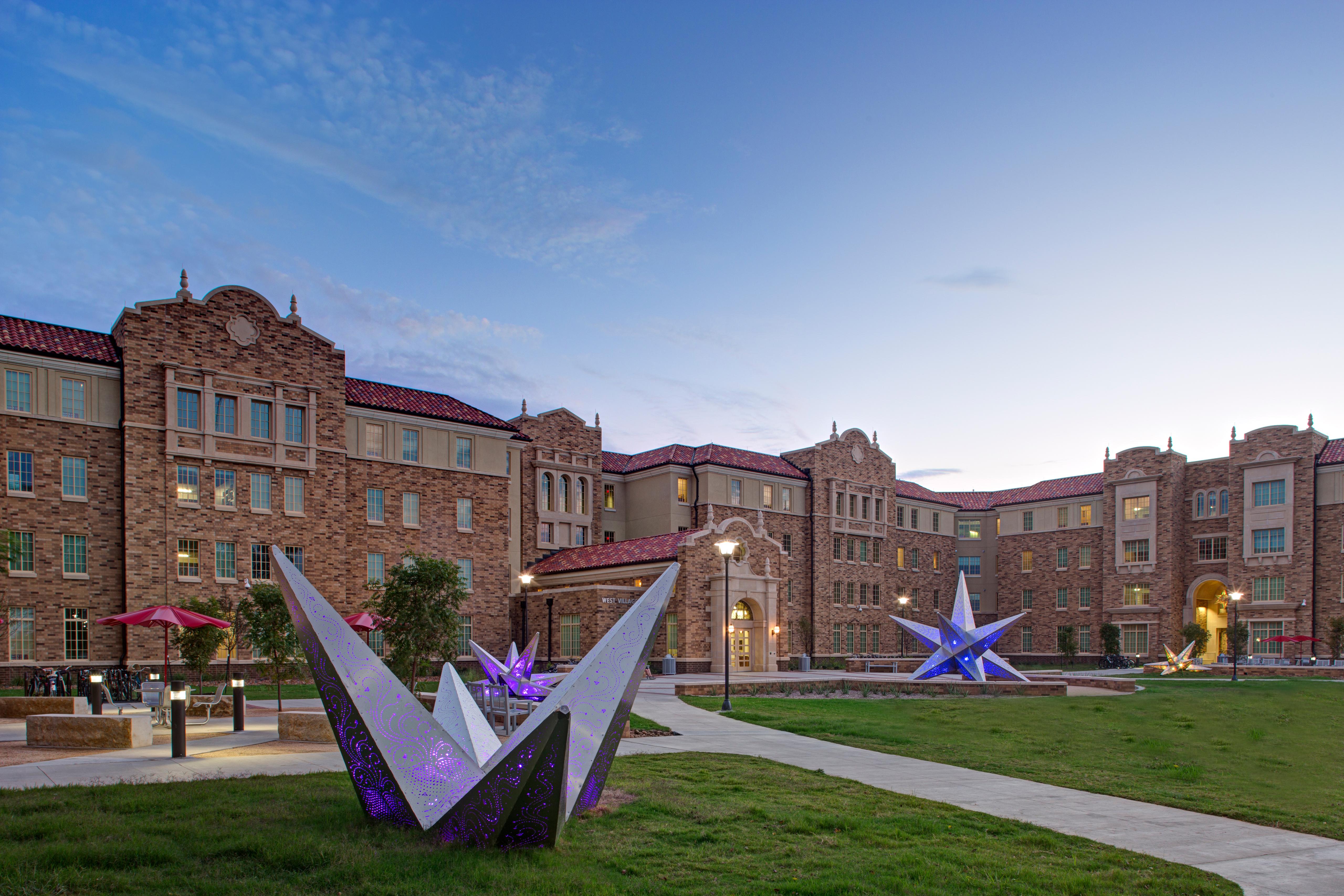
TTU’s residential communities provide several notable examples of public art integrated into student life. At BGK’s West Village, Texas Rising by Joe O'Connell and Blessing Hancock uses illuminated stainless-steel forms inspired by stars emerging from the ground. The artists conceived the works as representations of a student's journey and growth throughout their academic career. Perforated patterns reference campus traditions and Texas Tech culture, while interactive lighting elements invite students to engage directly with the artwork. At our Honors Hall project, Marc Fornes' Zephyr expands the relationship between art and architecture even further. The sculptural aluminum pavilion was intentionally positioned at the convergence of campus pathways, creating what the artist describes as a social anchor within the residential community. Part sculpture, part canopy, and part gathering space, Zephyr blurs the line between architecture and public art, functioning simultaneously as landmark, shelter, and destination. Its striking form encourages students to gather, interact, and create new connections while providing a memorable identity for the community it serves.
At TXST’s Cibolo Hall, artist Matthew Mazzotta's Living Habitat offers a thoughtful interpretation of the university's beloved bobcat mascot. Rather than depicting the bobcat as a fierce predator, the sculpture portrays the animal at rest. The work serves as a reminder that while students spend their days pursuing ambitious academic and personal goals, residence halls provide a place of comfort, renewal, and belonging. As both a landmark and a gathering place, the installation reinforces the role of the residential community as a home away from home.
Art, Discovery, and Academic Identity
In academic environments, public art often serves a different purpose. Beyond creating memorable places, these installations frequently connect users to an institution's mission, history, and aspirations.
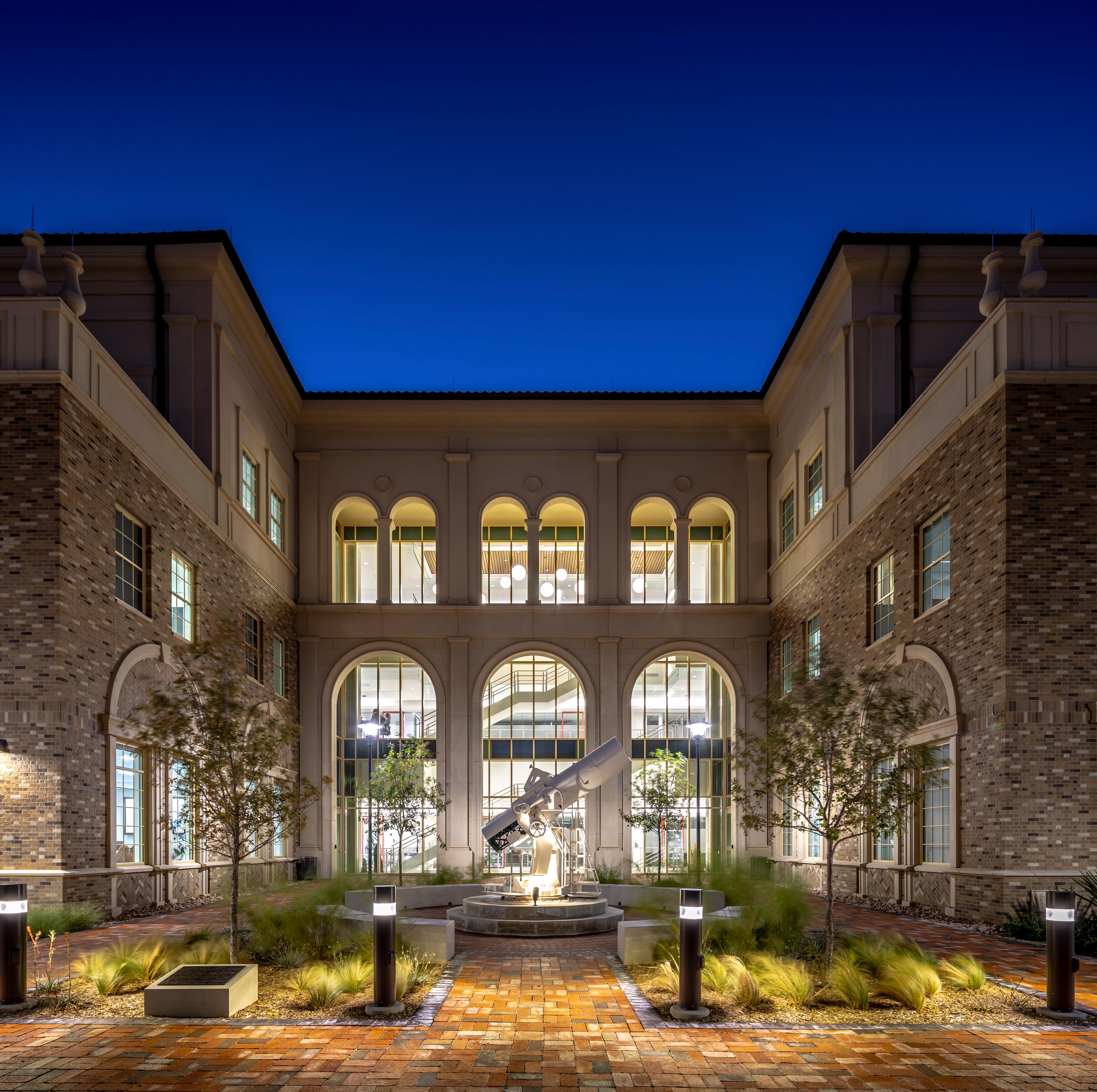
TTU’s Academic Sciences Building demonstrates another approach. Rather than commissioning new artwork, a decommissioned IGOR telescope was restored to prominence in the courtyard—connecting contemporary scientific discovery with a legacy of observation, measurement, and research. Originally developed for tracking and recording missile tests, the telescope now serves as a visible reminder of the scientific curiosity and innovation that define the disciplines housed within the building.
In our work at TXST’s Esperanza Hall, public art contributes to the identity of both the building and the broader Round Rock campus. The project incorporates an installation by renowned artist Gabriel Dawe, whose work explores light, color, and perception, alongside integrated design elements inspired by the Esperanza flower including an installation designed by BGK. Together, these features help establish a distinctive sense of place while supporting TXST’s long-term vision for the campus. As the university looks toward future growth, the artwork provides an early expression of the campus's evolving identity.
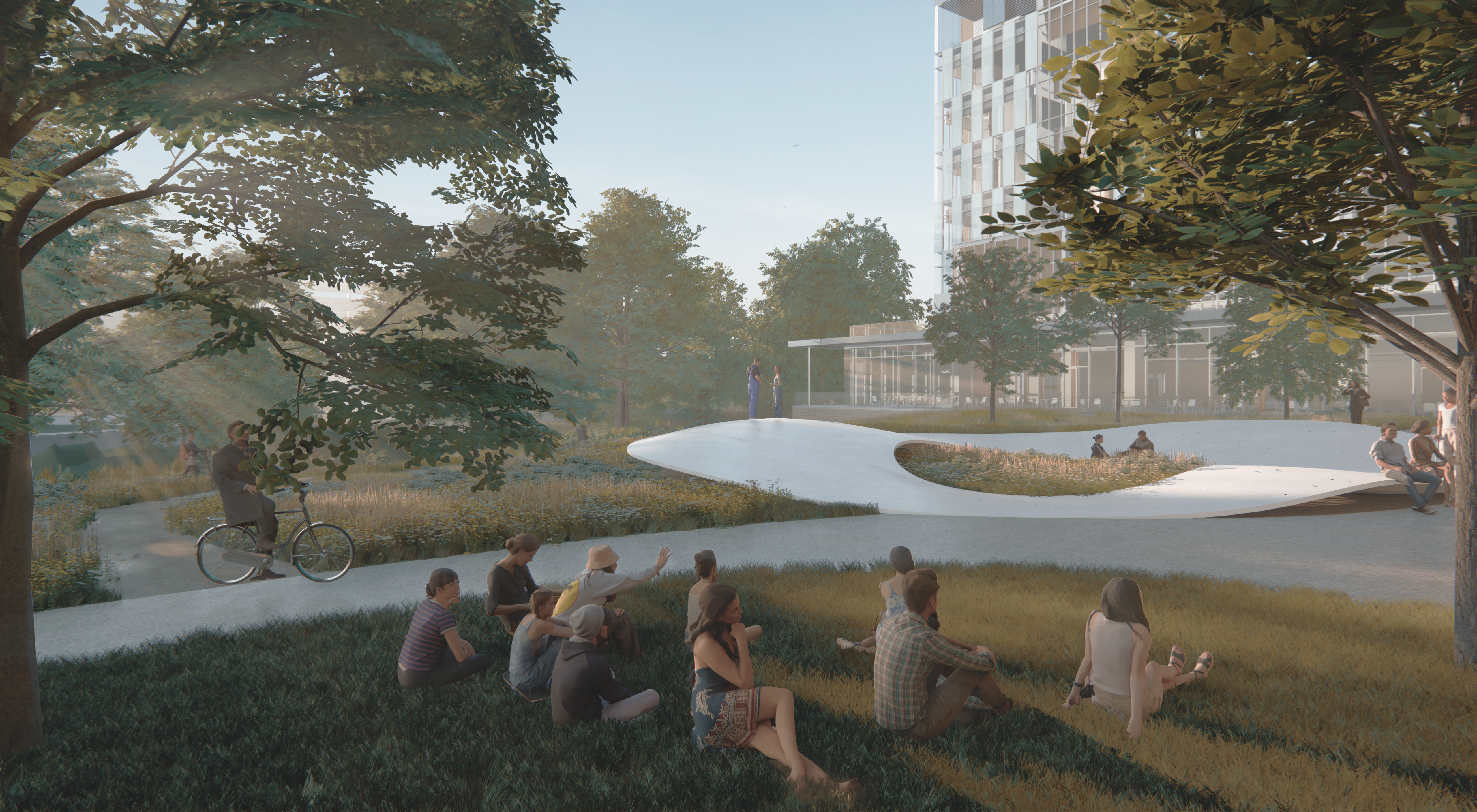
This theme reaches its fullest expression at UT Austin’s Autry C. Stephens Engineering Discovery Building. Designed in collaboration with CO Architects, the facility will be home to Maya Lin's Floating Landscape, a site-specific installation integrated within the reimagined Mulva Courtyard along Waller Creek. Best known for designing the Vietnam Veterans Memorial in Washington, D.C., Lin is widely recognized for works that connect landscape, memory, and the environment. Her installation for the Engineering Discovery Building maps the night sky from the evening of the university's founding, creating a powerful connection between place, history, and discovery. Anchoring the gateway of UT Austin’s engineering district, the work reflects the building's mission while grounding a forward-looking research environment in a deeper cultural and institutional narrative.
Looking Forward
Public art programs continue to evolve, creating new opportunities for collaboration between artists, architects, universities, municipalities, and communities. While the works themselves vary widely in scale, medium, and intent, they share a common goal: enriching the human experience of place.
As Floating Landscape moves toward completion, it serves as a reminder of the enduring relationship between art and architecture. From civic landmarks in downtown Austin to residence halls, academic buildings, and research facilities across Texas, BGK's experience has shown that the most successful projects emerge when art is considered not as an addition to the built environment, but as an integral part of the story the building seeks to tell. Through these collaborations, art helps transform buildings into destinations, strengthens connections between people and place, and creates experiences that continue to resonate long after construction is complete.