New Life for Dead Malls
A Complex Opportunity
The decline of enclosed shopping malls is one of the most visible shifts in the American built environment. While adaptive reuse presents a clear opportunity, transforming these sites is rarely straightforward. Beyond design and technical challenges, success depends on vision, partnerships, and the ability to navigate complex social, political, and economic realities that often shape—or stall—progress.
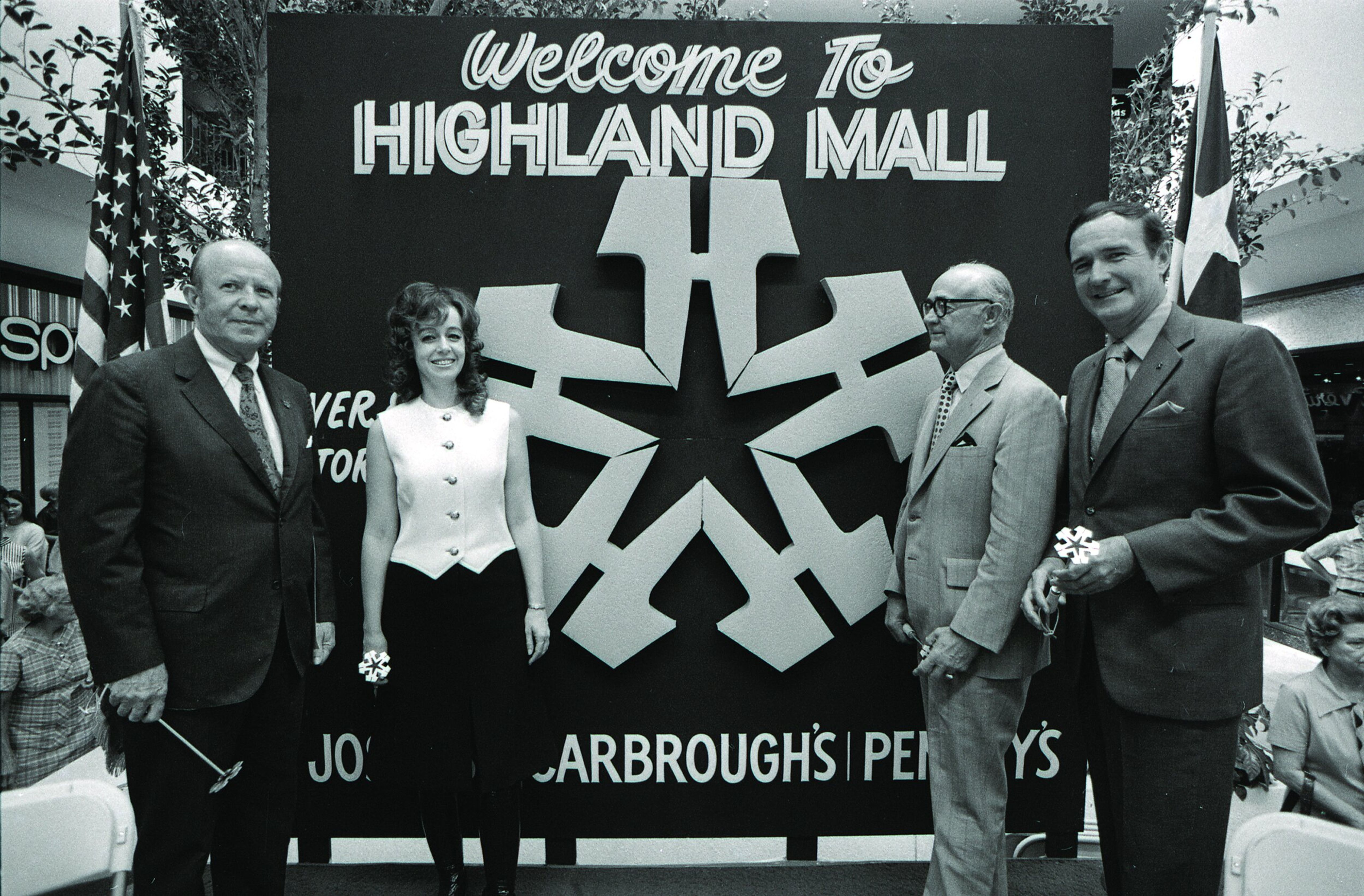
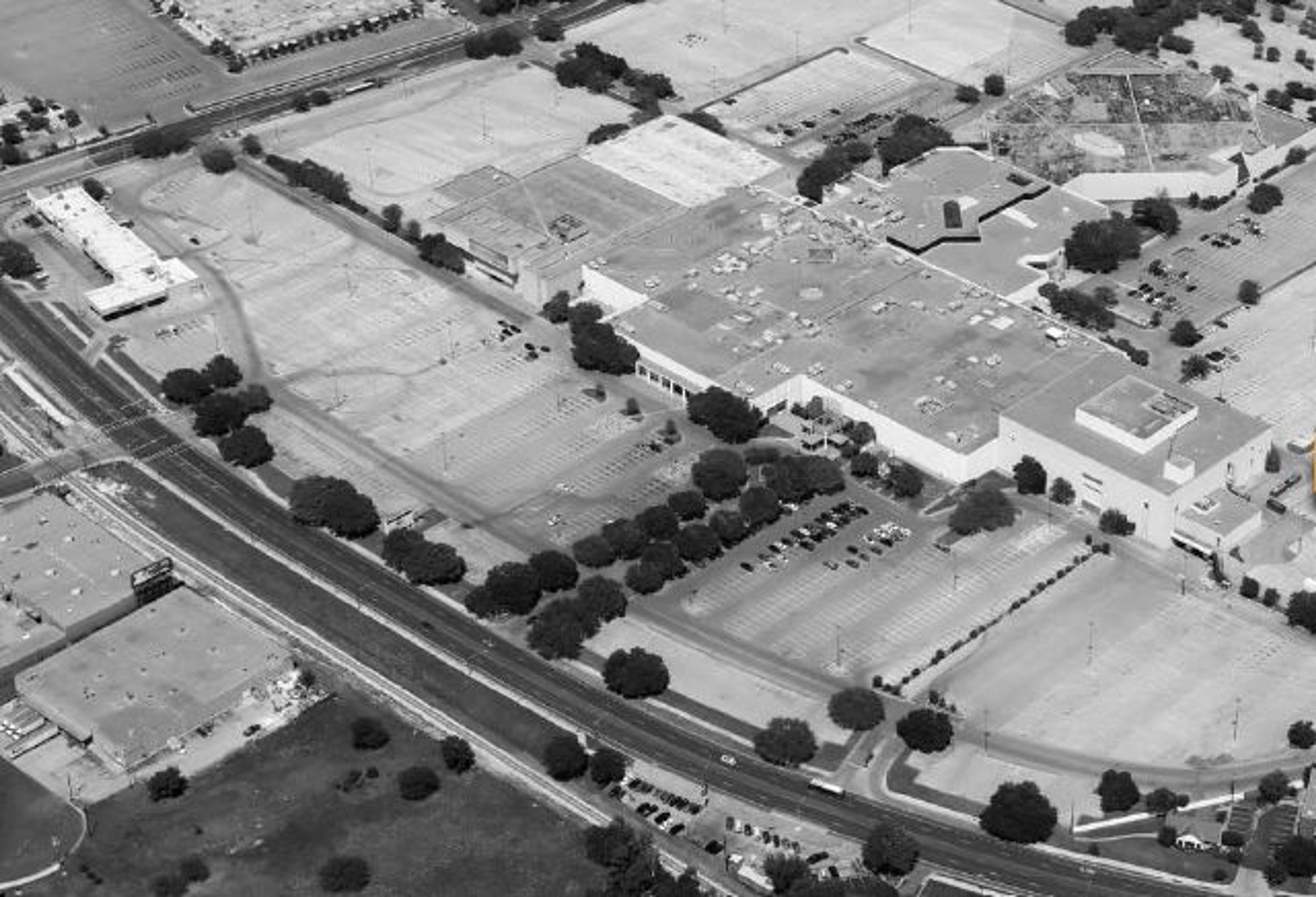
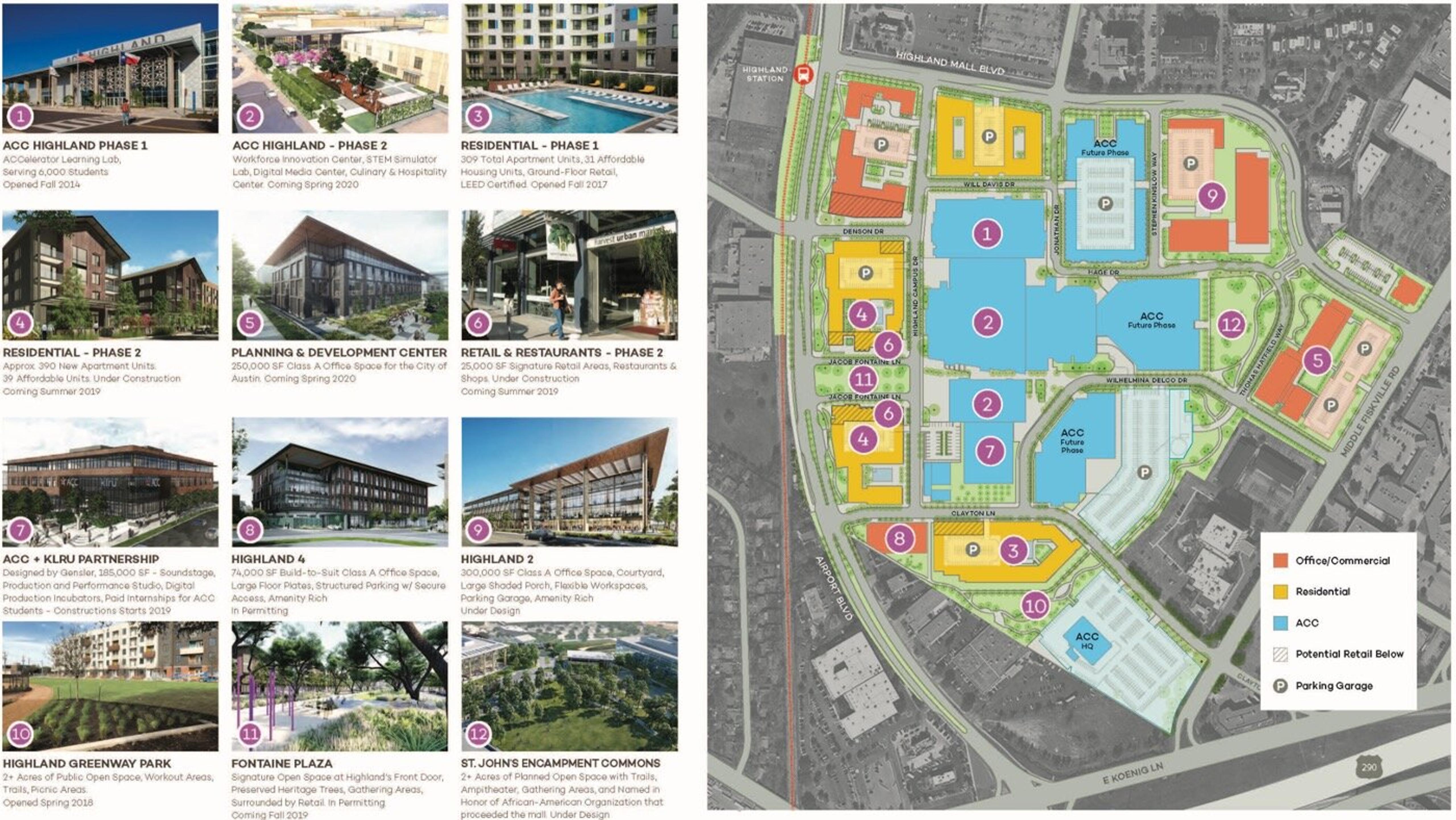
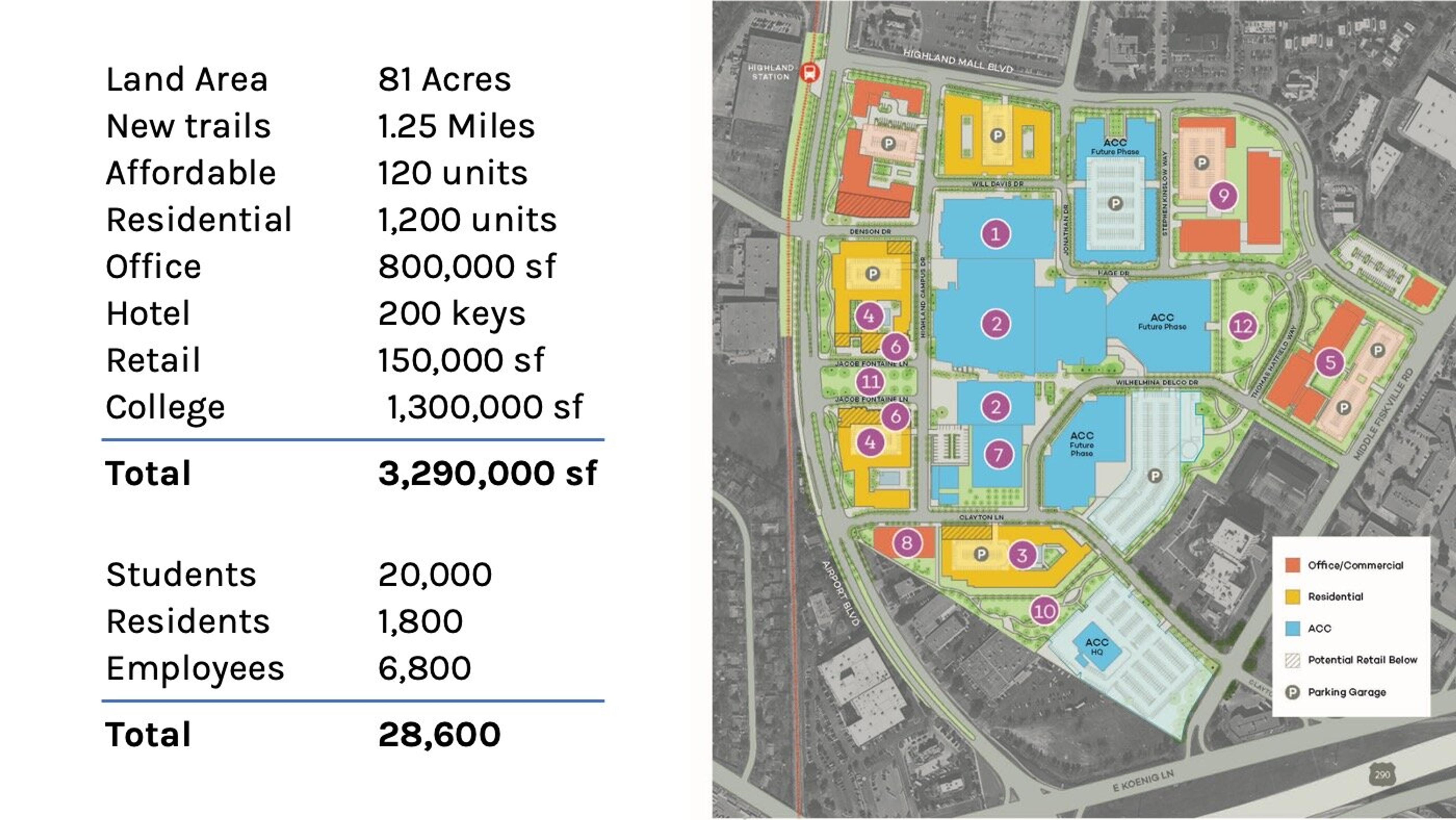
Across the country, former malls are being reimagined as mixed-use districts, educational campuses, and community-centered destinations. For example, Northgate Mall in Seattle is being redeveloped as a transit-oriented urban district, while Villa Italia Mall in Lakewood, Colorado became Belmar, a vibrant mixed-use downtown. In Austin, our own transformation of the former Highland Mall into Austin Community College District’s (ACC) Highland Campus, and the former Hancock Center Sears into Central Health’s headquarters and central clinic, demonstrate how large-scale retail can be repurposed to serve long-term civic and educational needs.
While these examples highlight the range of possibilities, they also underscore a common reality: the greatest challenges are often not physical, but strategic. We have learned firsthand that the following strategic realities are essential to transforming dead malls.
Vision
A clear vision and statement of purpose must be established early, with input from impacted stakeholders, and revisited often to maintain focus and inform decision-making throughout a project. Successful transformation begins by defining not only what a site will become, but what it must achieve for the broader community it serves.
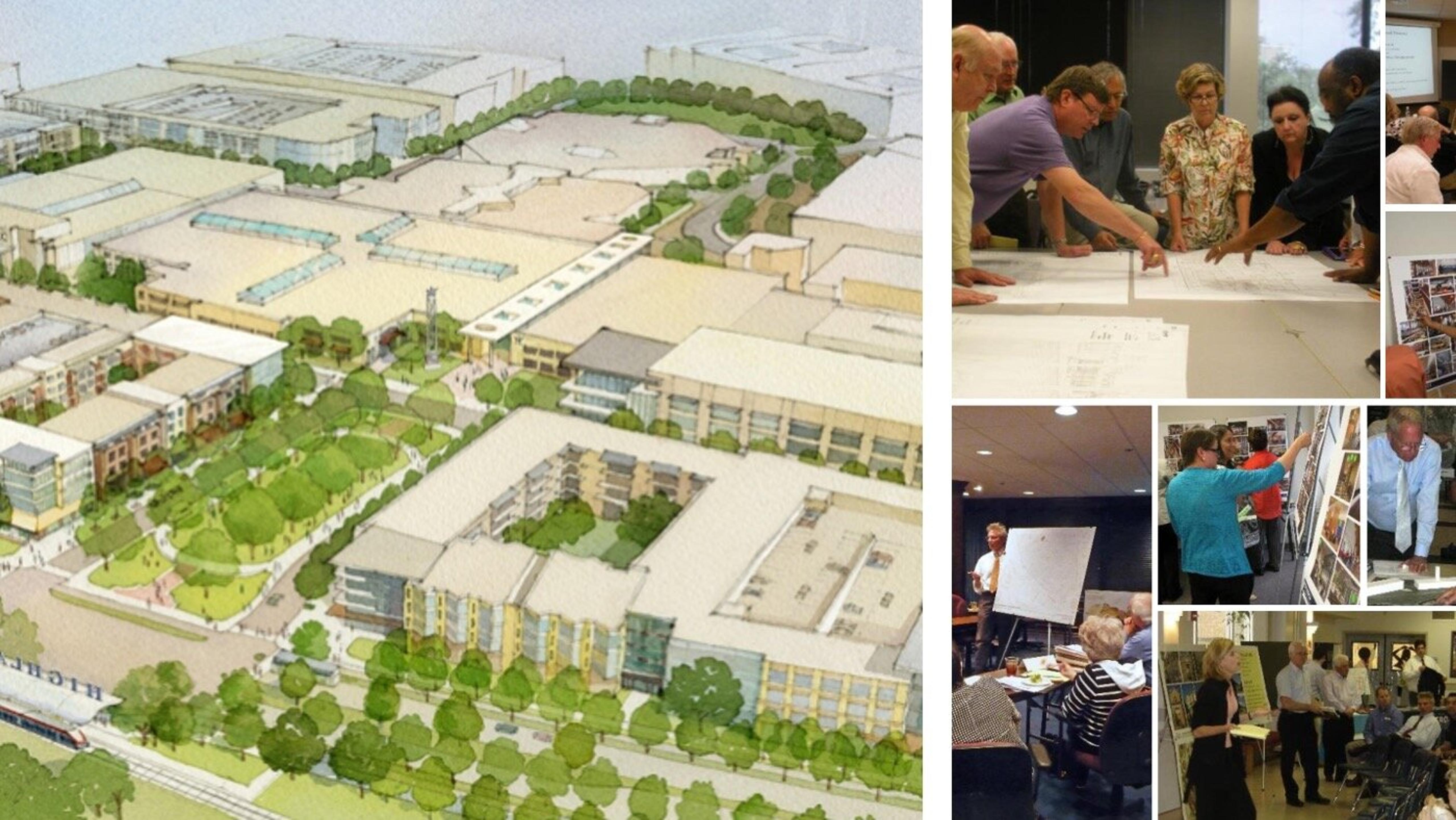
In the case of Highland Mall, this vision was shaped through inclusive engagement with diverse stakeholders affected by the mall’s past and future, including neighborhood and community groups, city council members, educational institutions, property owners, retailers, historians, advocacy organizations, and the general public. Engagement included town halls, workshops, and anonymous surveys to ensure a broad range of perspectives.
This process culminated in a shared vision:
“Highland Mall will be transformed into a vibrant and pedestrian-friendly mixed-use district of educational, commercial, and residential uses organized to enhance the educational experience of students and the quality of life for area residents, employees, and visitors.”
Partnerships
Beyond initial visioning, successful mall transformations depend on a range of strategic partnerships to maximize a site’s full potential, reduce risk, and leverage the strengths of multiple stakeholders. These typically include developers, operators, user groups, and tenants working together to create an organic and diverse community that is more resilient than any single entity, particularly in periods of economic uncertainty or market disruption.
At Highland Mall, this collaborative approach helped transform the site from a vacant “dead mall” with no taxable value into a vibrant mixed-use district with an annual taxable value of approximately $12 million. This shift underscores the long-term civic and economic impact that aligned partnerships can achieve when working toward a shared vision.
Identity, Legacy & Material Reuse
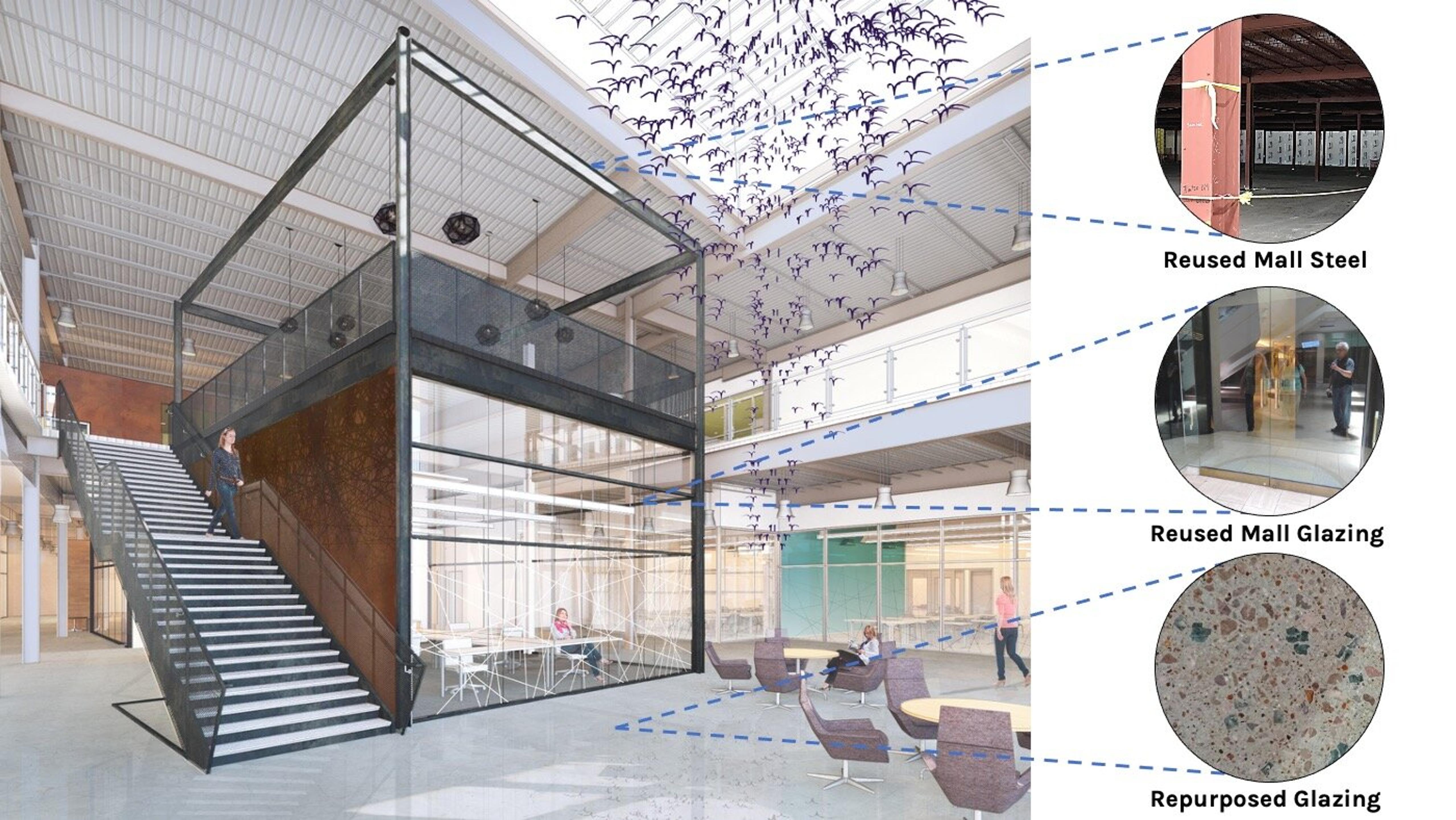
While adaptive reuse can, in some cases, approach or exceed the cost of new construction, it offers significant value beyond initial economics. Seasoned materials and preserved elements add character and establish a tangible connection to history and place. Salvaged materials also contribute to sustainability goals, reducing construction waste, incorporating recycled content, minimizing off-gassing, and lowering overall embodied carbon.
Beyond environmental performance, adaptive reuse creates measurable value through user experience, brand identity, and emotional association. Occupants often report higher satisfaction in environments that feel authentic, comfortable, and environmentally responsible.
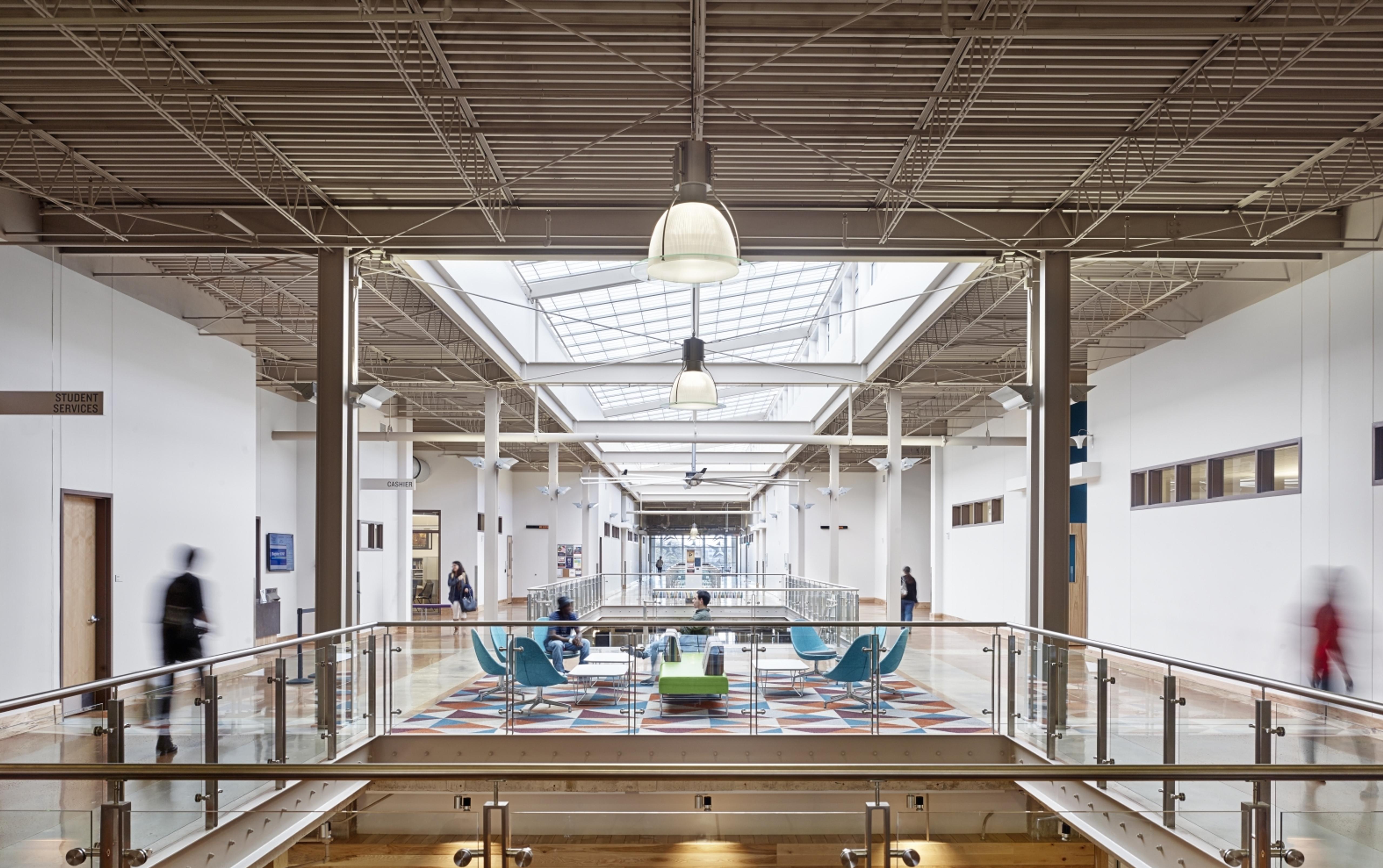
At Highland Mall, these ideas were particularly meaningful given the site’s significance within the community. A conscious decision was made to retain and reinterpret select elements of the original mall, including tenant glazing, steel structures, and other retail remnants. These materials were repositioned within the new college environment and made legible through branding, wayfinding, and architectural finishes, reinforcing continuity between past and present while supporting a new academic identity.
Diversity & Programming Mix
Socioeconomic and programmatic diversity are key to creating a multi-dimensional environment that promotes vitality, inclusivity, and culture. Rather than relying on a single use or user group, successful transformations incorporate a balanced mix of uses—for example, educational, residential, commercial, civic, and community-oriented programs—depending on the needs and context of the site.
This diversity increases the potential for cross-pollination and the exchange of ideas and opportunity within a place, strengthening its long-term relevance and resilience. When multiple programs coexist, they generate overlapping patterns of use that activate the site throughout the day and support a more dynamic and inclusive environment.
At its core, programming diversity is not simply a planning strategy, but a means of creating places that are adaptable, socially connected, and reflective of the communities they serve.
Courage
Perhaps the most underestimated requirement in large-scale retail transformation is courage. Adaptive reuse takes both courage and resilience, as these projects are rarely predictable and often reveal significant surprises along the way—including missing as-built drawings, unforeseen structural conditions, outdated or flimsy construction systems, and environmental hazards such as asbestos.
Progress is rarely linear. Each project demands sustained commitment, adaptability, and the willingness of both the design team and the owner/developer to remain steadfast in the face of uncertainty. Success depends on a shared resolve to adhere to the vision while navigating inevitable challenges, making necessary adjustments, and doing whatever is required to realize the intended outcome.
Ultimately, meaningful transformation requires more than technical expertise—it requires persistence, conviction, and the courage to see possibility where others see only constraint.