Advancing Student Success Through Immersive Learning Environments
The Challenge
A majority of community college students arrive unprepared for college-level work, are not successful in developmental or remedial coursework, and do not reach their educational goals. According to the National Student Clearinghouse, only 39% of community college students earn a certificate, associate degree or bachelor’s degree within six years.
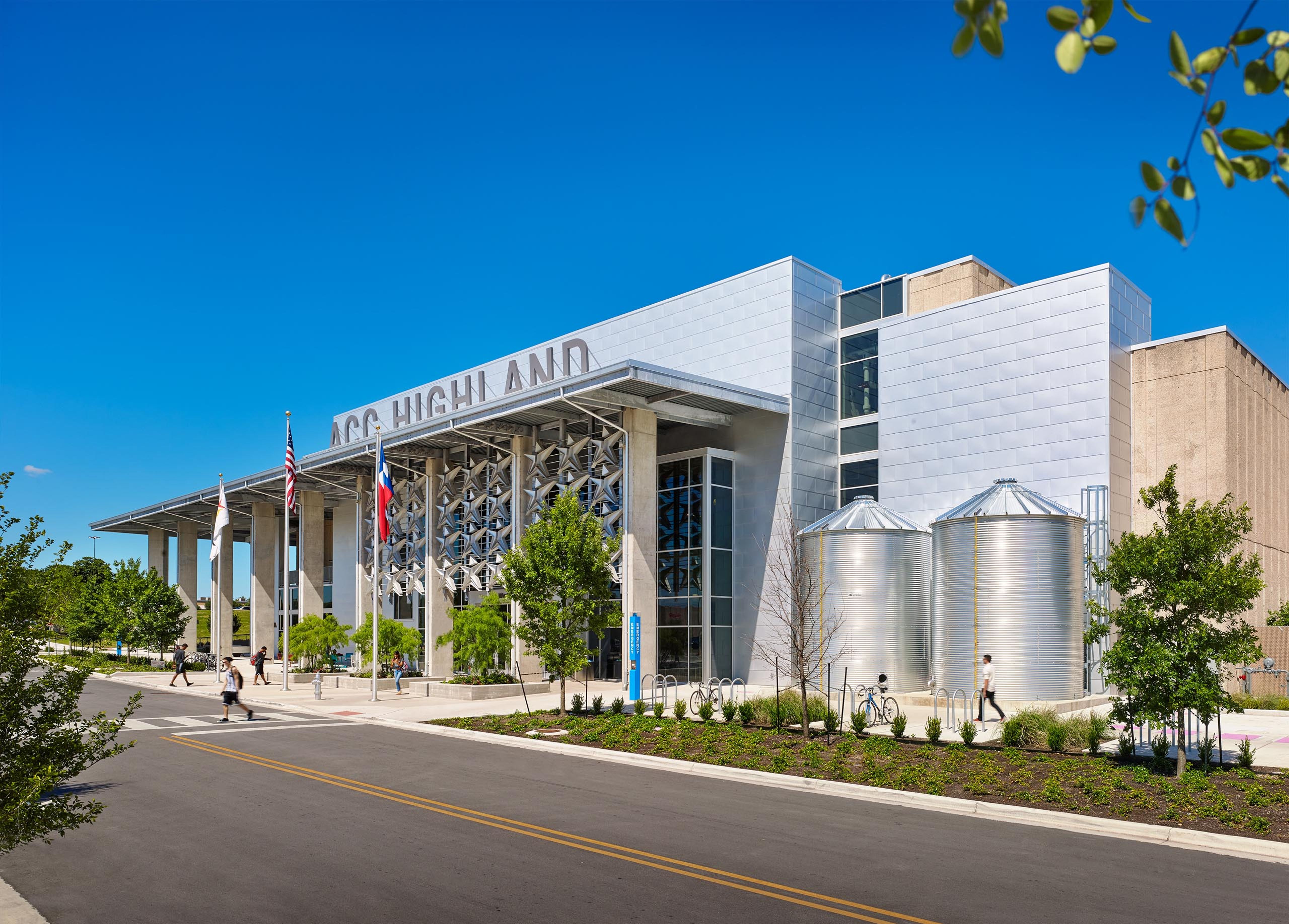
How can architecture impact new and innovative approaches to education delivery? While Austin Community College District’s (ACC) Highland Campus is a powerful example of adaptive reuse and urban renewal, the real story is the impact the project is having on student success, student satisfaction, and persistence.
At the community college level, encouraging persistence and supporting student success benefits all students, with particular attention to developmental and historically underrepresented students who have lower rates of persistence and completion.
The Solution
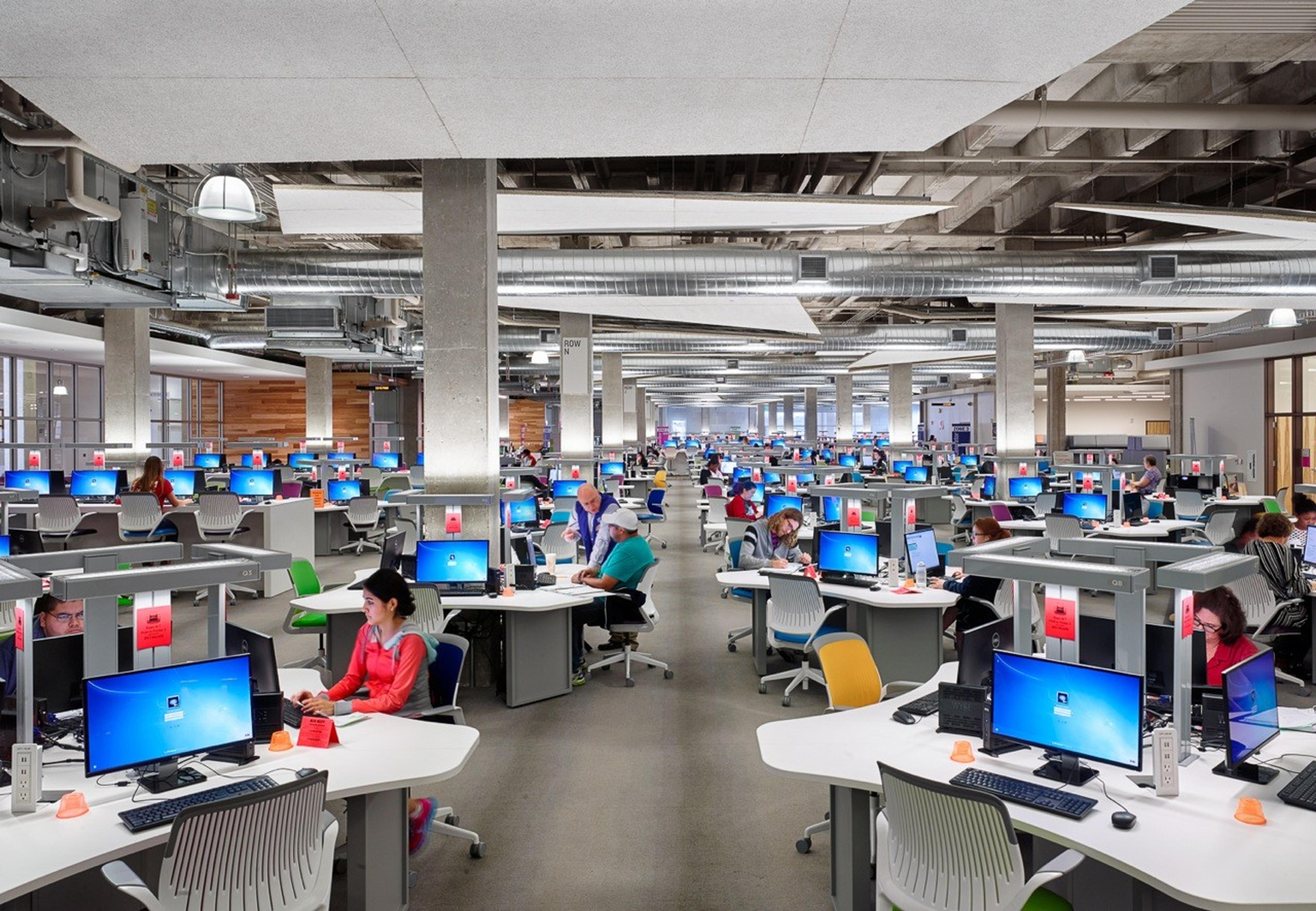
To tackle the problem, ACC began thinking big, very big – envisioning a variety of programs and services organized in a single room the size of a football field.
Working together with ACC, we began to study and research new architectural concepts and approaches that would support the College’s intentions to shift pedagogy, focusing on the individual student coupled with immersive student services. The result was a state-of-the-art, technology-enabled learning environment, named the ACCelerator.
The ACCelerator
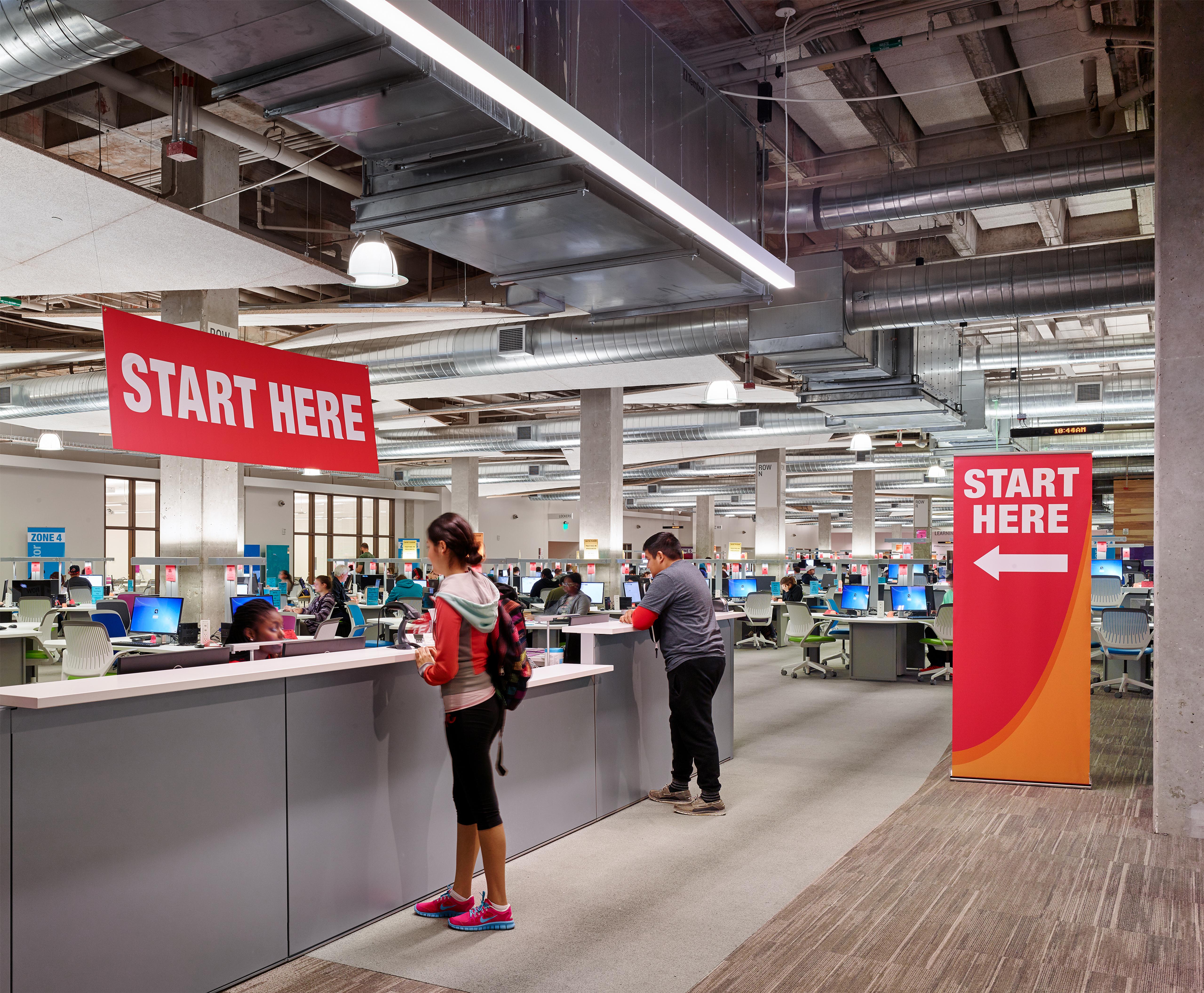
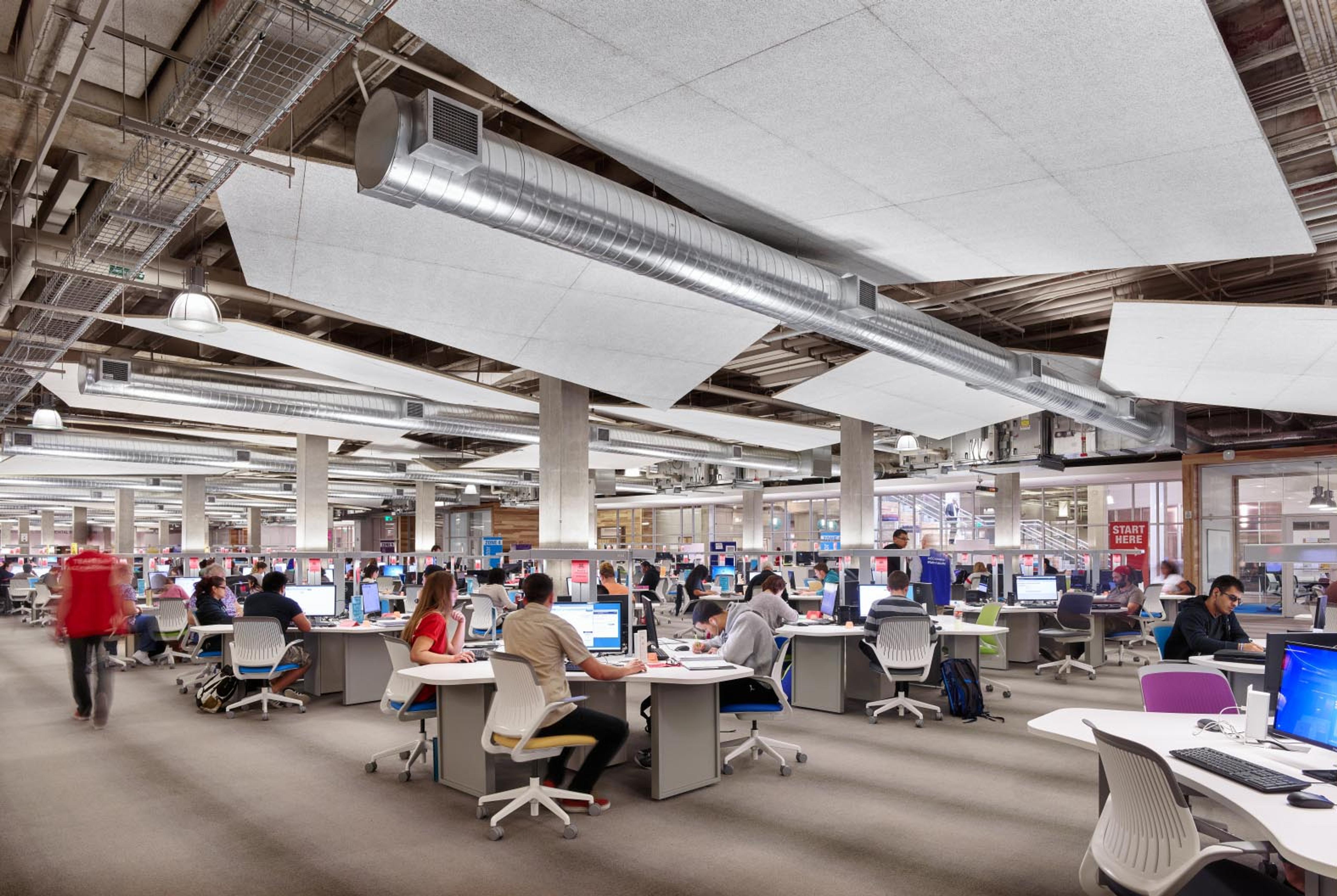
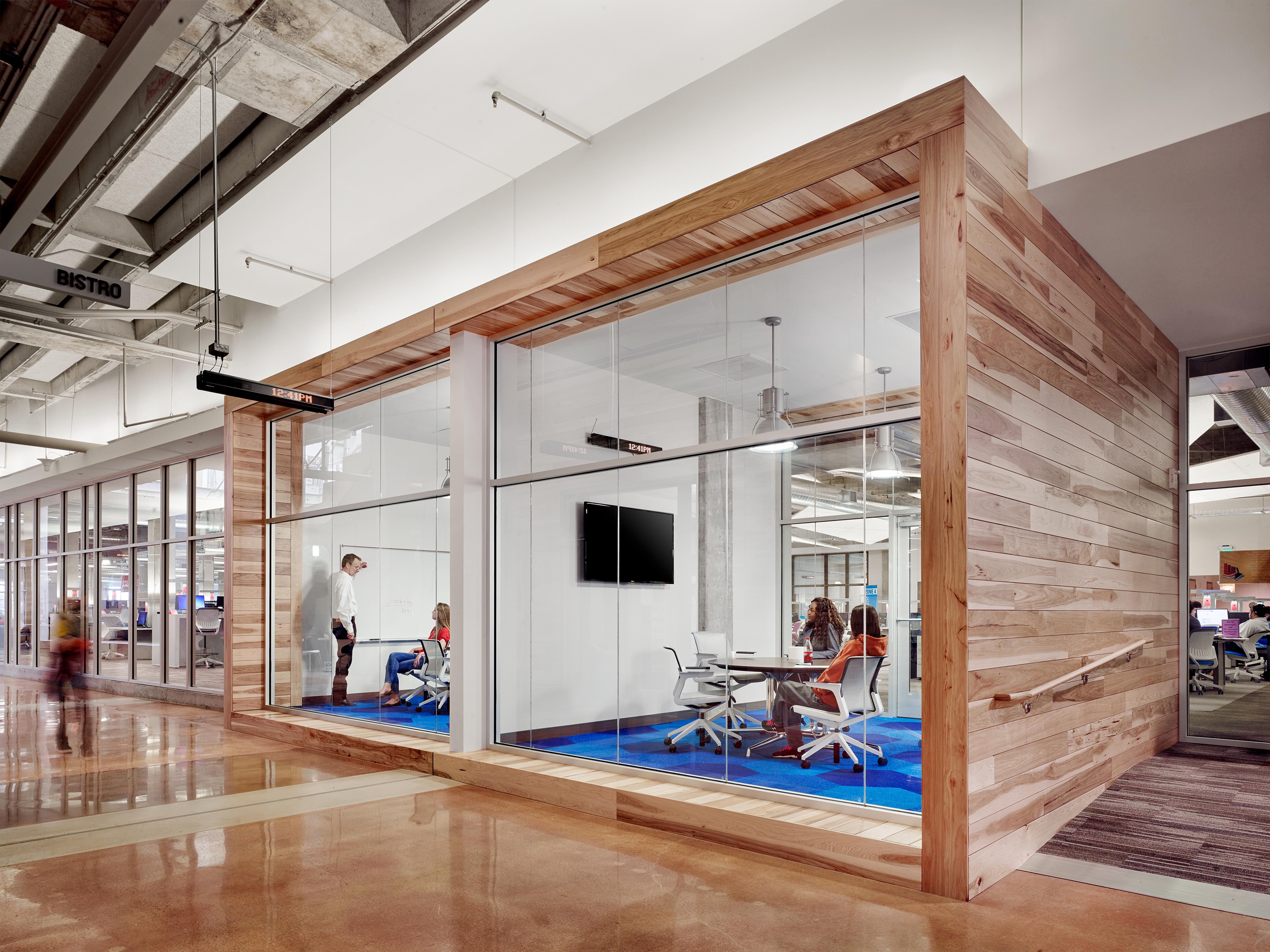
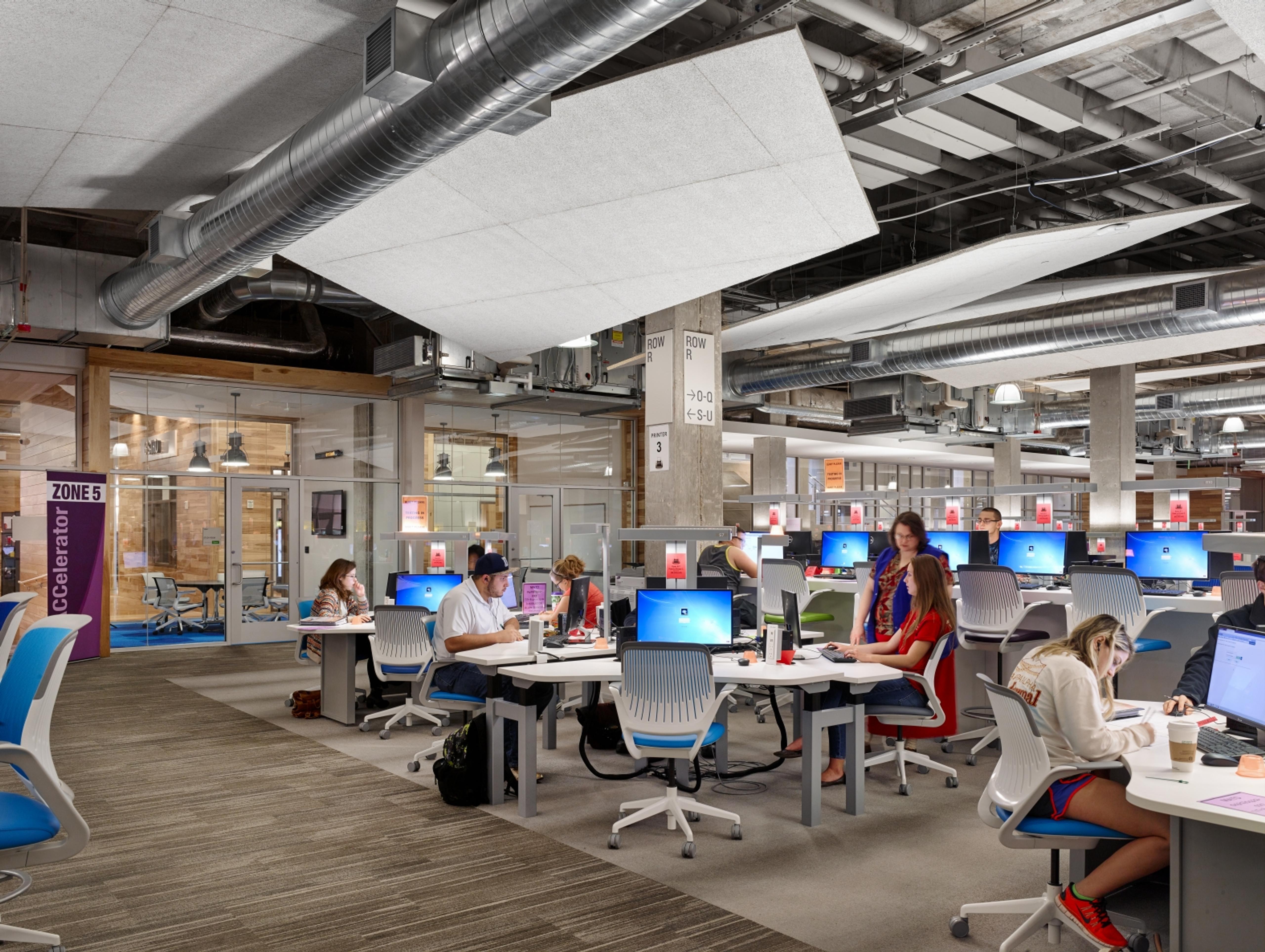
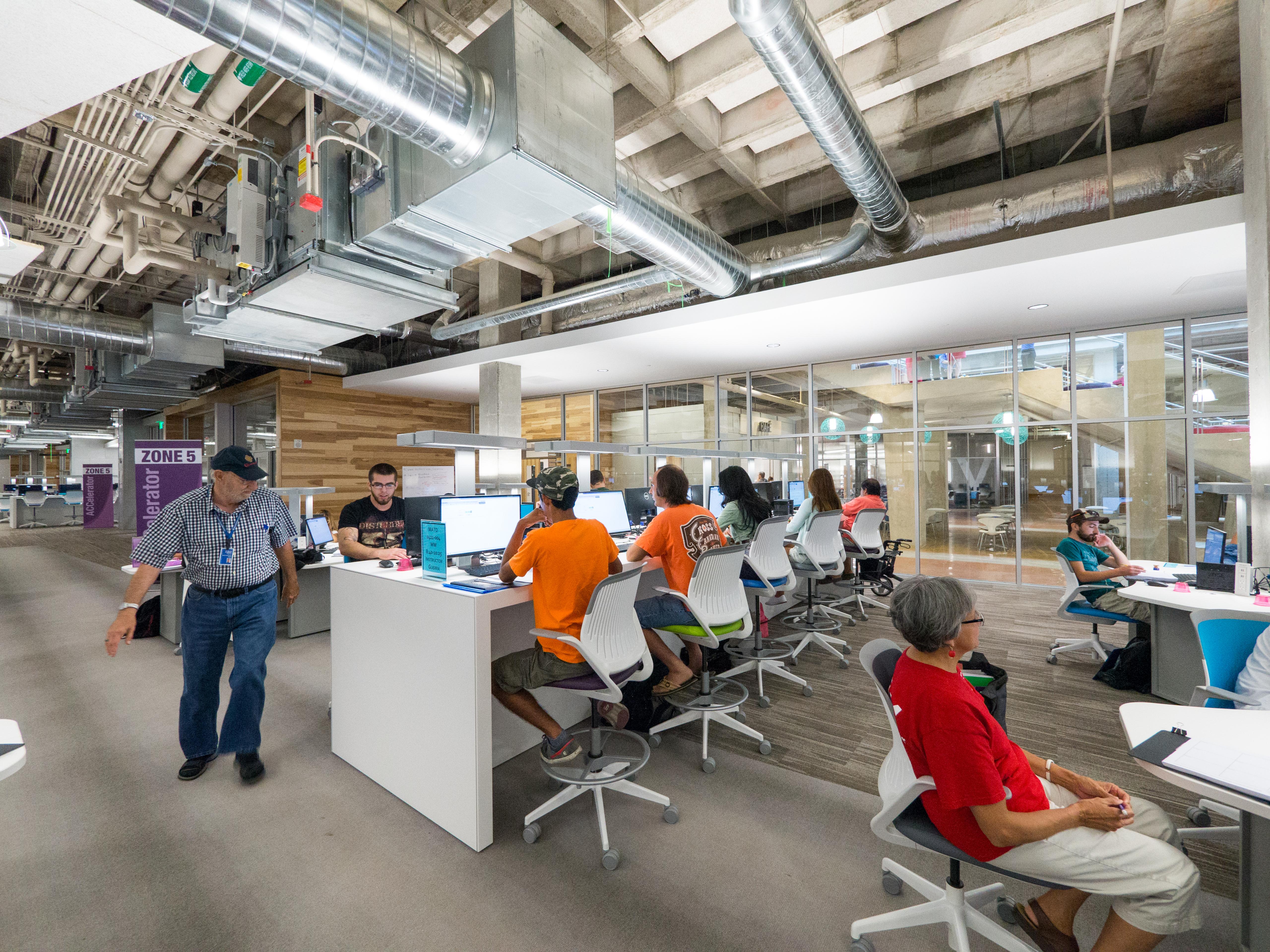
ACC’s ACCelerator is a 32,000-square-foot learning lab located within a former shopping mall that has been transformed into a modern campus environment. The facility features a large open lab organized around 115 technology-rich table clusters and 14 computer bars, supported by 604 Dell desktop virtualization workstations. Surrounding the central lab are three transparent, glass-enclosed classrooms and 15 small group rooms that provide flexible settings for instruction, collaboration, and focused study. Additional equipment, including Apple MacBook Pros, Mac Minis, and Smartboards, further supports a diverse range of instructional and digital learning needs.
This innovative environment is intentionally designed to shift the educational experience from an instructor-centered model to one that prioritizes the individual needs of each student, supported through embedded and highly accessible student services. Within this framework, students are able to progress at their own pace while receiving immediate guidance from faculty, academic coaches, advisors, counselors, and tutors available in real time. Functioning as a true “one-stop shop” for student success, the ACCelerator integrates academic instruction and student support into a single, cohesive, and highly responsive learning environment.
Redesigning the Student Experience
Inspired by ACC’s bold vision, we began to see the project as an opportunity to redesign the student experience. Architecture arranged around this new educational pedagogical shift. We were guided by the ideas of a learning environment that was student-centric, welcoming, safe and comfortable, open, adaptive and engaging. A place to celebrate success and encourage interdepartmental collaboration. Carefully designed to integrate technology, lighting, acoustics and flexibility and a learning space you want to just be able to “hang out” in.
Overall, everyone feels a sense of camaraderie and teamwork they have not experienced on a traditional campus. As the President of the University, Dr. Richard Rhodes expressed to us, “I want you to design the coolest place on earth to learn”.
Curriculum Re-Inspired
The ACCelerator was initially focused only on developmental math curriculum. With the success experienced in math, faculty members from across disciplines began experimenting with instruction. As a result, today ACCelerator instruction has expanded to include Visual Communications, Game Development, Intensive English Composition, Writing, Art, Accounting, Library Instruction, Drama Lab, Physical Geography, Early College High School, Continuing Education and others.
Seeing Results
Early outcomes from the ACCelerator demonstrate the measurable impact of an integrated, student-centered learning environment on persistence, engagement, and academic success. Students who engaged with the space and its connected support services showed improved retention and stronger course performance, with particularly meaningful gains among developmental and historically underrepresented student populations.
Beyond the data, the results reinforce a broader finding: when academic instruction, advising, tutoring, and support services are intentionally co-located and accessible, students are more likely to stay engaged, complete coursework, and continue their academic pathways. The ACCelerator model underscores the importance of environment as an active driver of student success, not simply a backdrop for learning.
This impact has also drawn significant national and international interest, with the ACCelerator welcoming visiting delegations from more than 30 countries and over 35 colleges and universities, along with representatives from organizations such as the U.S. Department of State, the Obama Administration, the Gates Foundation, and the Meadows and Communities Foundations. These engagements reflect the broader relevance of the model as a reference point for rethinking the future of higher education environments.